8-Bit Sequential Processor

A Unique Simulated Processing Unit, Presented Calculating Fibonacci.
Built from just wires, pegs and gates in Logic World.

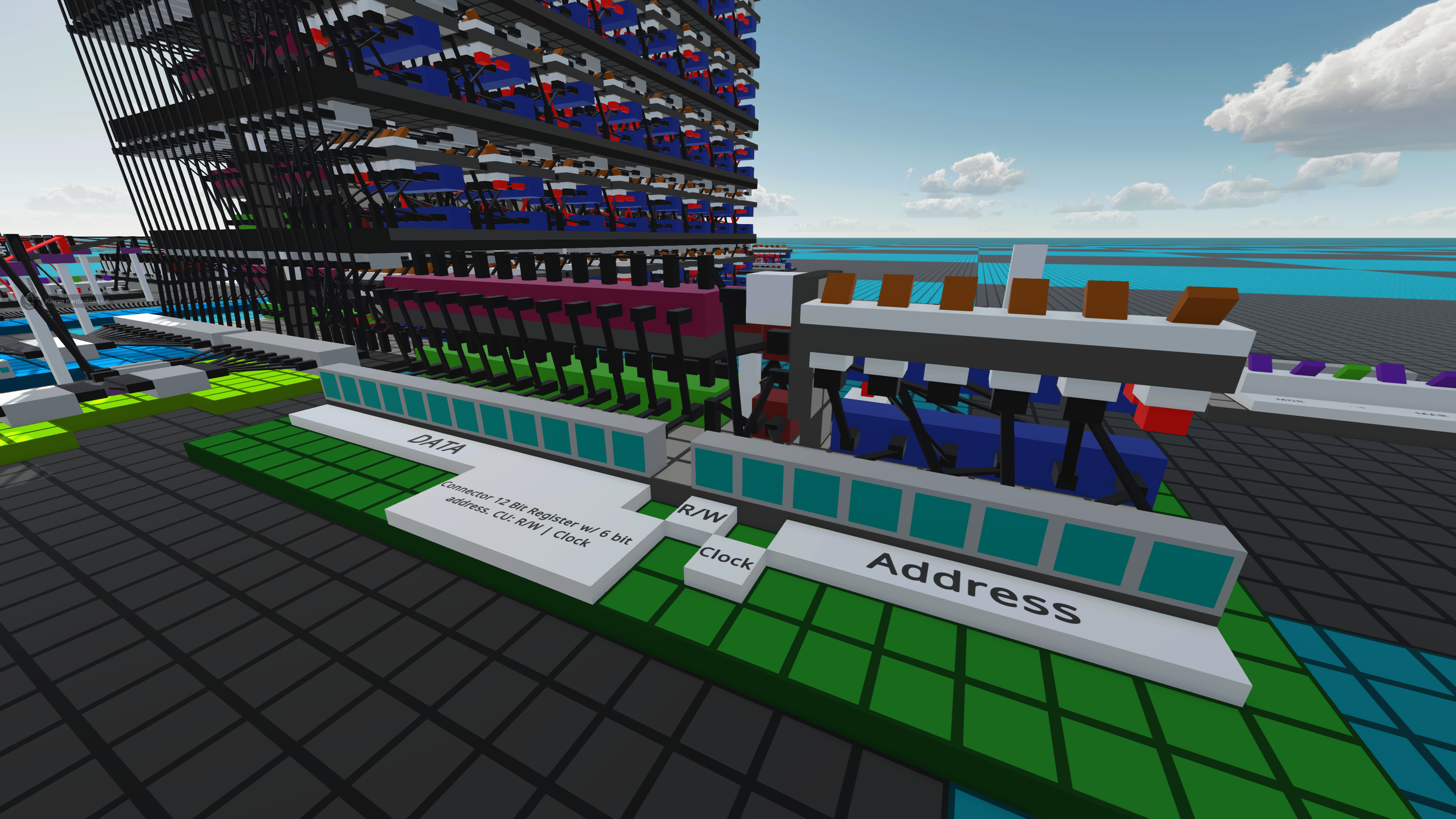
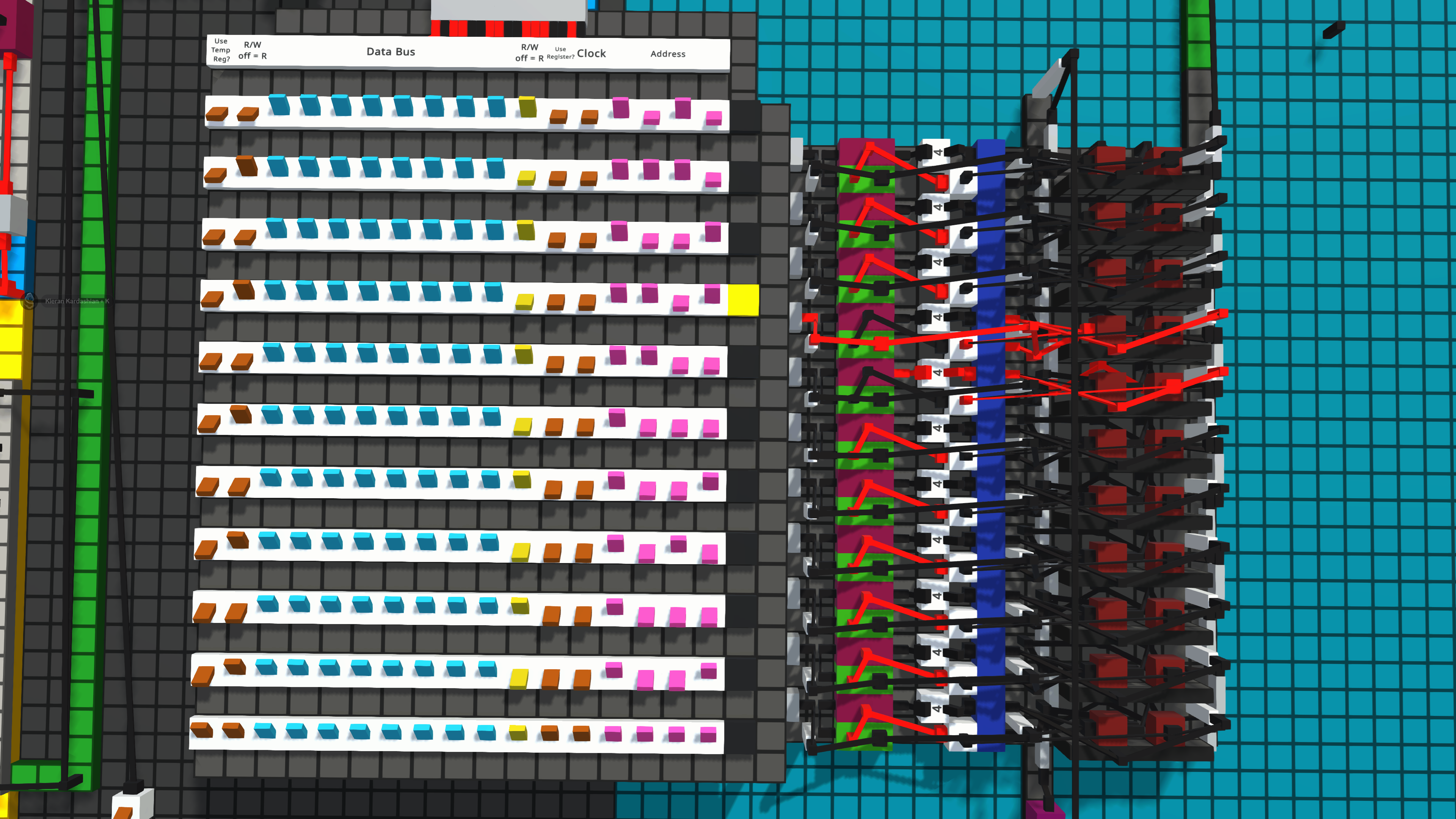
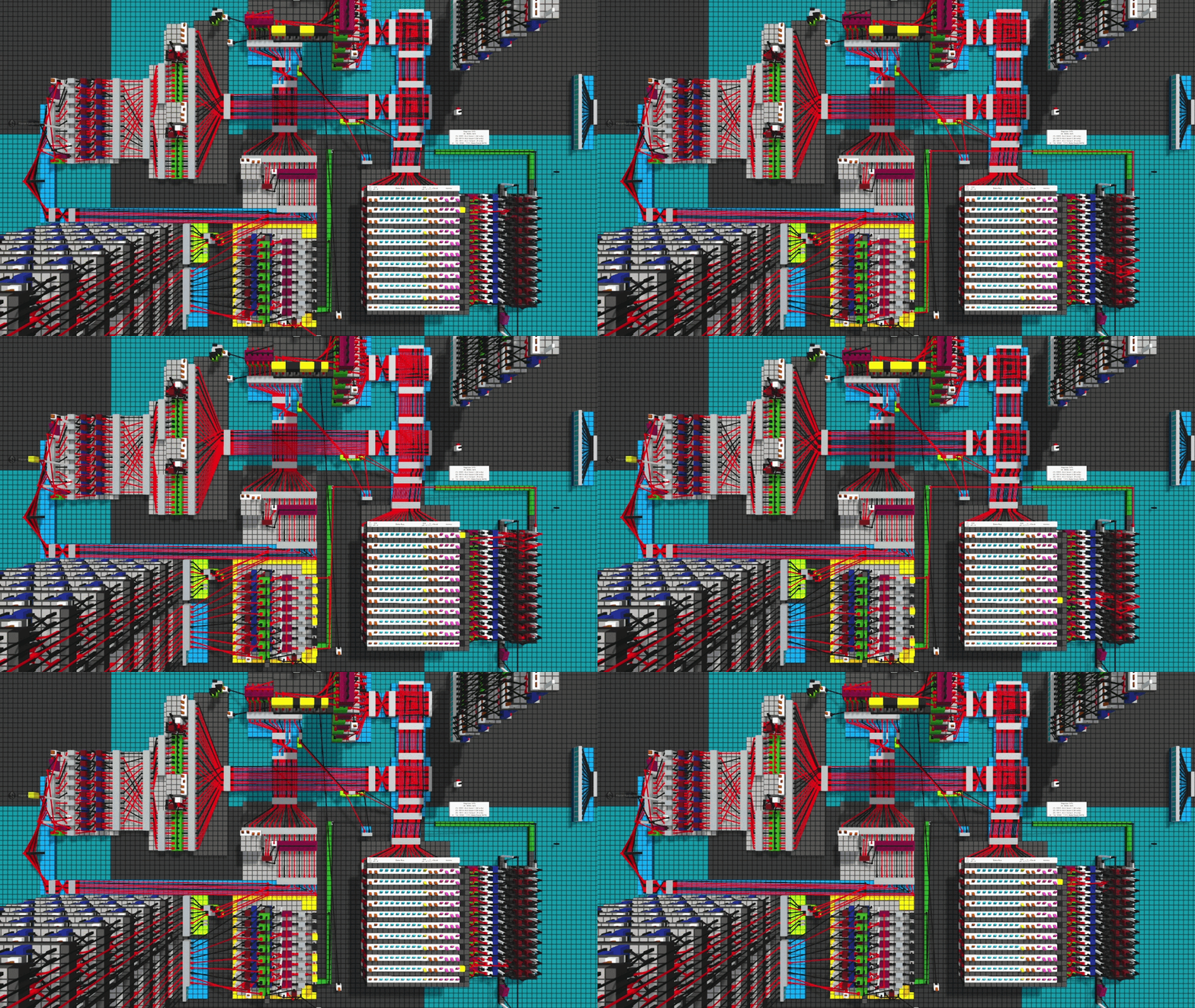
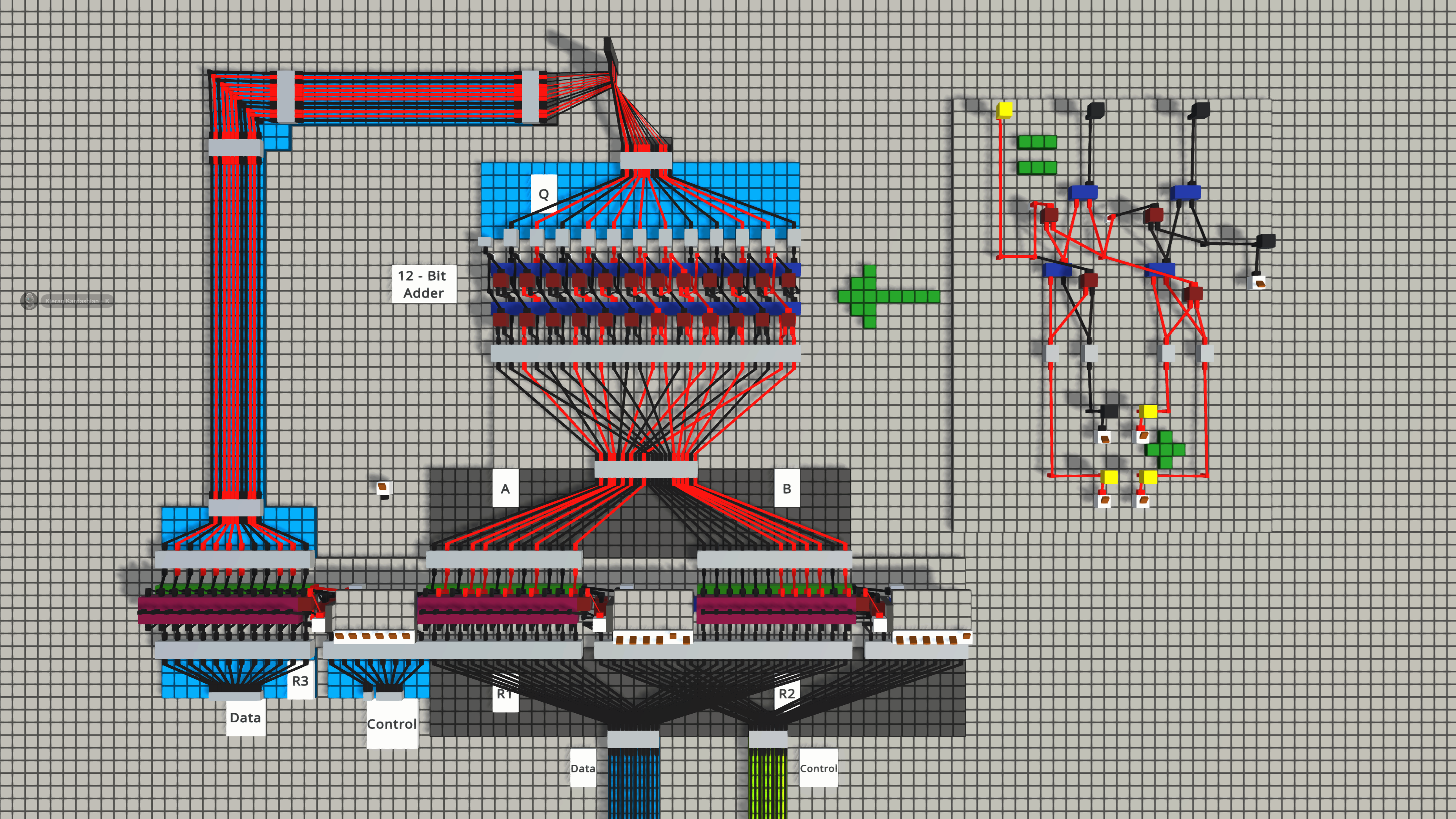
This project is a custom-built 8-bit computational system designed entirely from first principles (literal wires and gates). It demonstrates how arithmetic, memory, control logic, and clocking interact to execute a program at the bit level.

Full view of the 8-bit sequential processor inside Logic World, showing the complete wire and gate layout
CPU_SIMULATION.v3 // Full Build Overview LOGIC_WORLD · 8-BIT · SEQUENTIAL

Problem statement

What the system is

The System currently executes a Fibonacci sequence using a modular hardwired instruction chain. Every component — from logic gates to execution control — was designed and implemented manually, without any external references or templates.

Version 1 (v1) is fully functional and stable.

Version 2 (v2) is under development and introduces a true instruction pipeline, indirect memory addressing, branching, and advanced ALU functionality.

This was all implemented inside of Logic World, a sandbox game where you can build mechanical and digital systems using wires, gates, and other components.

Why I built it

I wanted to understand how computers actually work underneath abstraction layers. Not just how to write code for a processor, but how the processor itself executes instructions, stores state, moves data, and synchronises operations.

Building a CPU from individual logic components forces you to think differently. There is no compiler, framework, or operating system to hide mistakes. Every signal transition, memory operation, and timing issue has to be designed intentionally.

The project started as a small experiment with binary addition and quickly evolved into a complete sequential processor with memory, registers, control logic, and a functioning execution cycle.

"At some point, I realised I had accidentally started building an actual computer."

System Specification (v1)

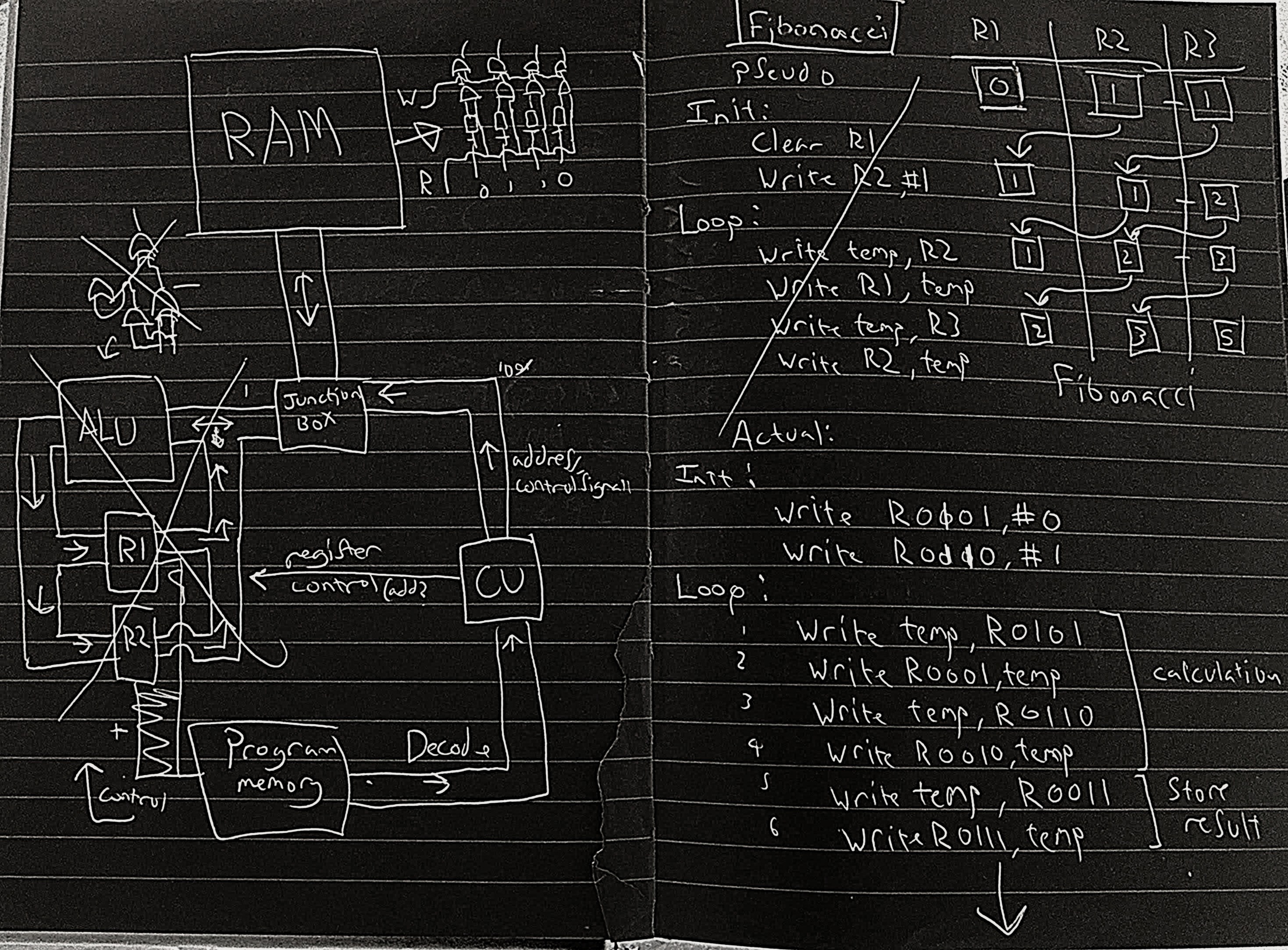
Block diagram showing the v1 CPU architecture: ALU, MDR, ACC, CU, RAM, BUS and clock connections
FIG 1 — pre-v1 System Architecture · Von Neumann · Fibonacci Sequence Planning

Architecture

PROCESSOR_TYPE: Sequential Hardwired Computation

DATA_WIDTH: 8-bit

ADDRESS_WIDTH: 4-bit (16 bytes of memory)

BUS_ARCHITECTURE: Von Neumann (Single Shared instruction/data bus)

EXECUTION_MODE: Ripple-Controlled sequential execution

CLOCK_SYSTEM: Automatic with manual step override

ENVIRONMENT: Logic World
Memory

ADDRESSIBLE_RANGE: 16 Addresses

IMPLEMENTED_MEMORY(V1): 8 Bytes

MEMORY_TYPE: R/W RAM

ACCESS_METHOD: Direct Addressing

Control

MDR: Operational

ACC: Operational

ALU: Operational - supports ADD

CU: Operational - hardwired sequential control logic

CLK: Operational, automatic with manual override

BUS: Operational

INPUT/OUTPUT: Output - Lightboard bit register visualisation

FLAGS: Overflow flag implemented

PIPELINE: NONE

BRANCHING: NONE

INDIRECT_ADDRESSING: NONE

PC: NONE

IR: NONE

INTERRUPTS: NONE

Results

What the project demonstrated

This project massively improved my understanding of computer architecture and low-level system design. Concepts that normally feel abstract — such as registers, buses, clock cycles, instruction execution — began to actually feel intuitive and tangible after designing them from the ground up. This demistified a lot of the complex ideas and turned them into practical engineering problems.

It also changed how I think about software. Building even simple functionality at the hardware level gives a much better appreciation for abstraction, efficiency, and system constraints.

  • Designed and implemented a working sequential processor architecture.
  • Built modular memory, ALU, and control subsystems from logic components.
  • Executed real computational programs including Fibonacci generation.
  • Developed debugging and testing strategies for low-level logic systems.

Lorem ipsum

Lorem ipsum dolor sit amet, consectetur adipiscing elit. Redacted lorem ipsum dolor sit amet.

"Lorem ipsum dolor sit amet, consectetur adipiscing elit."

— Lorem Ipsum

More detail

Notes